

Why Should You Choose a Climbing Conveyor for Your Warehouse?
Is your warehouse floor cluttered with packages and manual labor? Moving goods between different heights can slow down your entire operation and cause unnecessary fatigue for your hard-working team.
A climbing conveyor, also known as an incline conveyor, is a motorized belt system designed to move items between different elevations. It automates the transfer of goods from floor level to mezzanines or trucks, significantly increasing loading speed while reducing physical strain on workers.
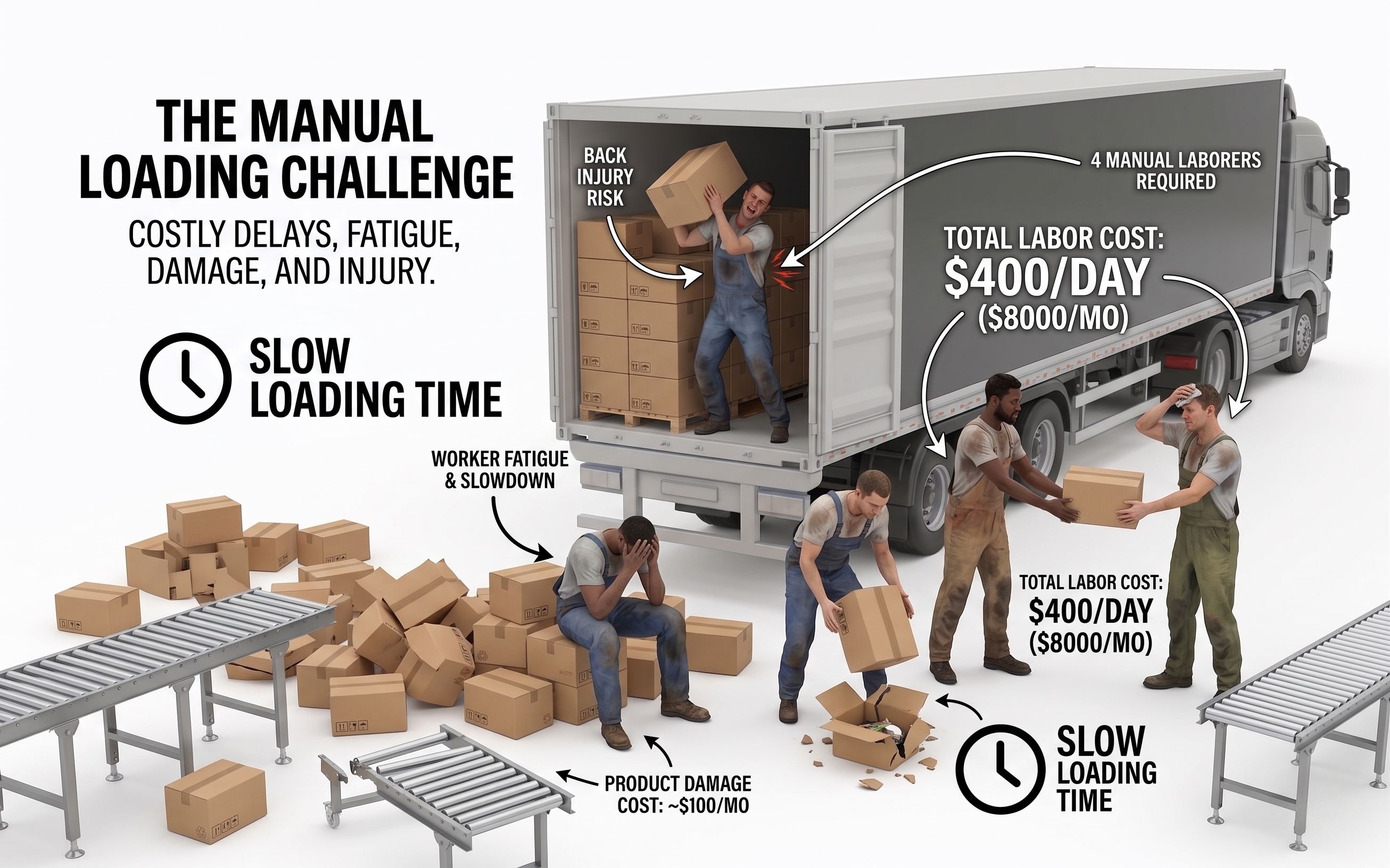
I have spent many years walking through busy distribution centers and I always notice the same struggle. Workers spend hours lifting heavy boxes onto high platforms or into the back of tall containers. This process is not just slow; it is a safety risk that eventually leads to burnout and errors. When I see a facility switch to an automated climbing system, the atmosphere changes instantly. The workflow becomes a smooth, continuous stream of movement rather than a series of heavy lifts. If you want to keep your business moving forward, you have to look at how you handle vertical transitions.
How Does a Climbing Conveyor Improve Loading Speed?
Are you tired of seeing trucks sit at your dock for hours while workers manually stack boxes? Slow loading times can create a bottleneck that affects your entire delivery schedule and costs you money.
A climbing conveyor accelerates loading by providing a constant flow of goods directly into the vehicle. It eliminates the need for manual carrying up ramps, allowing one person to do the work of three in half the time, ensuring on-time shipments.
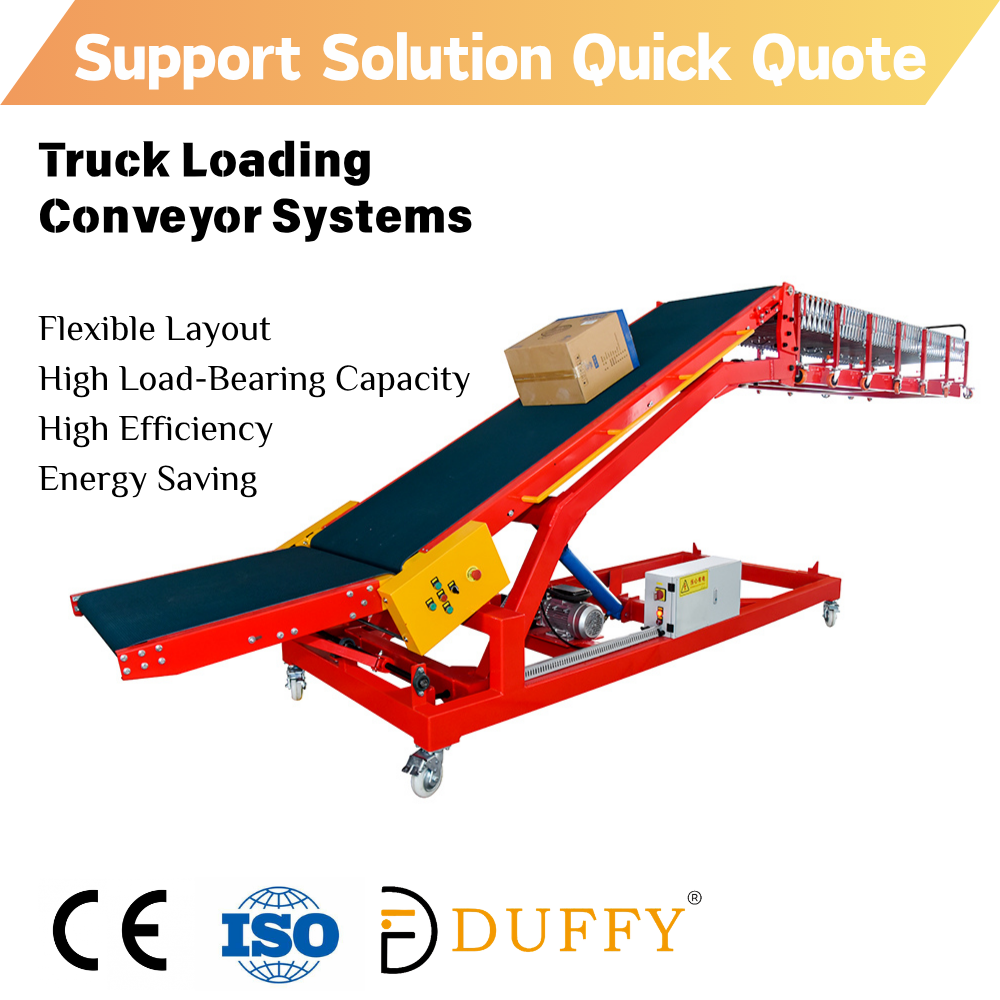
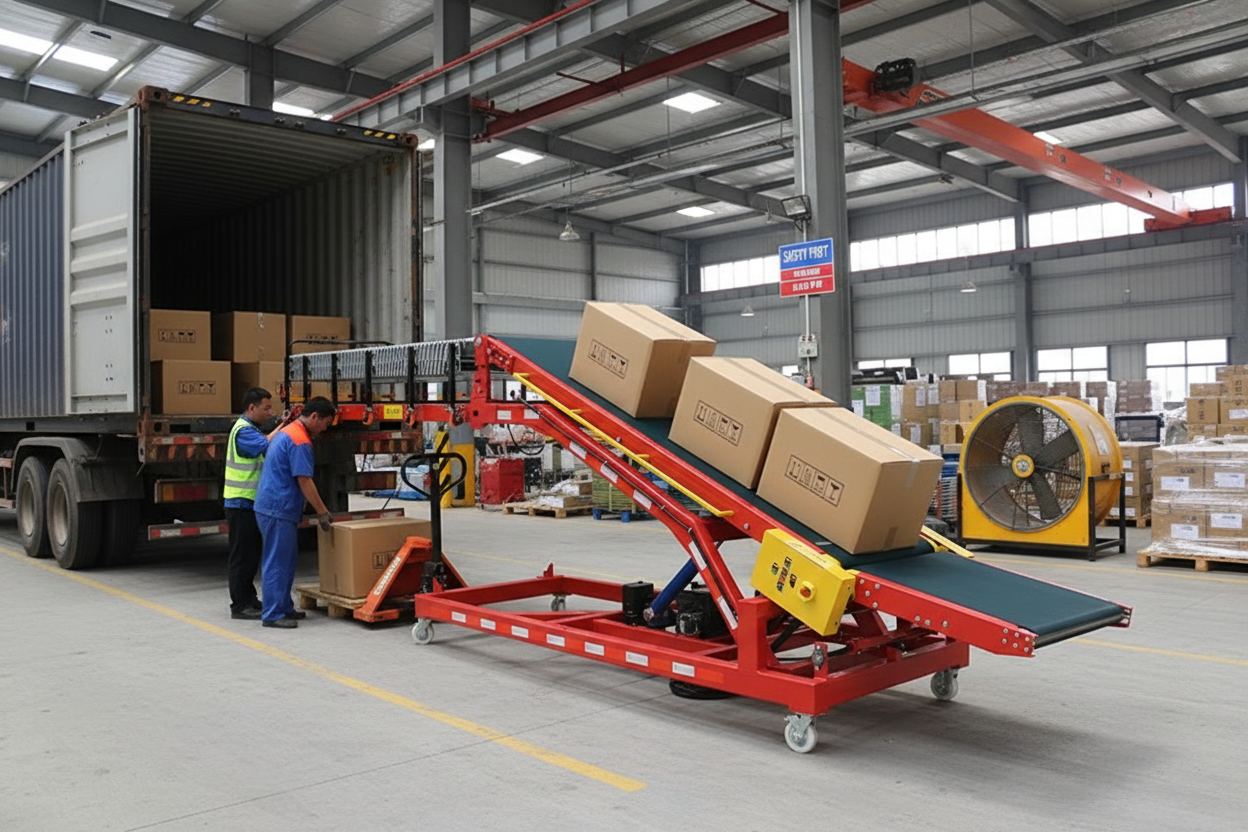
When we build these systems at Duffy Machinery, we focus on the "flow." In my experience, the biggest delay in a warehouse happens at the "hand-off" point—the moment a package leaves the floor and enters a truck. A climbing conveyor acts as a bridge. By adjusting the height between 1 and 1.7 meters, our conveyors meet the truck bed exactly where it is. This means the worker inside the truck just has to guide the box into place. We have seen customers like JD.com and SF Express use these to handle peak season surges. It turns a chaotic loading dock into a high-speed transit zone. You stop paying for idle time and start paying for actual movement.
Can a Climbing Conveyor Save Space in Small Facilities?
Is your facility too small for long, bulky equipment? Many warehouse managers worry that adding automation will take up too much floor space and make it hard for people to move around.
Climbing conveyors are highly space-efficient because they use vertical space rather than horizontal floor area. Many models, such as telescopic or mobile incline conveyors, can be folded or moved away when they are not in use to keep your aisles clear.
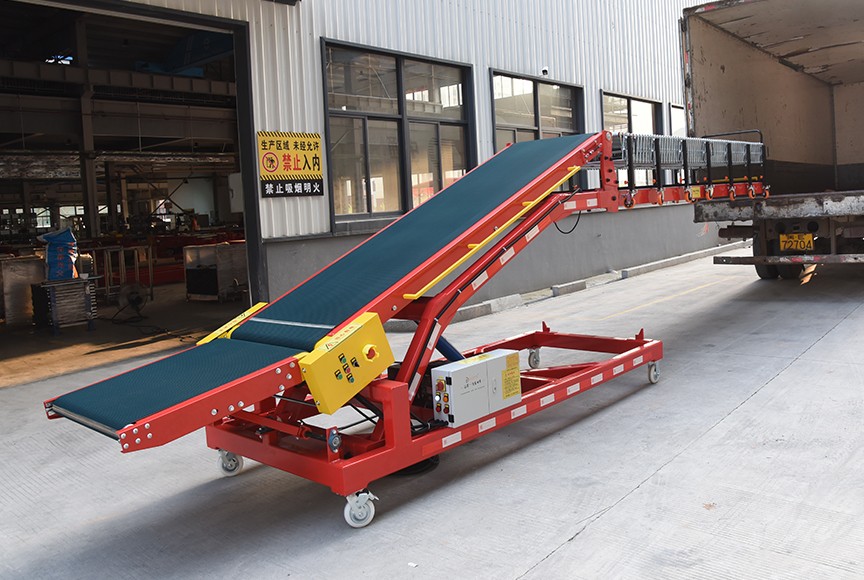
I often visit smaller factories where every square meter counts. I tell these owners that "flat" thinking is the enemy of growth. If you only move goods along the floor, you run out of room fast. A climbing conveyor allows you to use your vertical "air rights." You can move your packing or storage area to a mezzanine level. This frees up the ground floor for more production lines or heavy machinery. At our factory, we design these systems to be flexible. If you need the space for a forklift to pass, you simply roll the conveyor aside. It is about making the machine fit your building, not making your building fit the machine. Using the height of your building is the cheapest way to expand your operations without moving to a new warehouse.
What Features Should You Look for in a Reliable Conveyor?
Are you worried about buying a machine that breaks down during your busiest shift? Investing in the wrong equipment can lead to expensive repairs and stopped production lines that frustrate your customers and staff.
You should look for a climbing conveyor with high-quality rollers, a durable motor, and adjustable height settings. Safety features like emergency stops and non-slip belts are essential to protect your employees and your products during steep inclines.
In my 14 years of manufacturing, I have learned that the small details determine the life of the machine. For example, we thread every shaft to a specific depth because it ensures the rollers stay stable under heavy loads. We use galvanized or stainless steel to prevent rust. When I walk through our Roller Workshop, I see our team calibrating every single piece. If the runout is off by even a tiny bit, we fix it. You want a conveyor that handles 50 to 60kg without vibrating or making loud noises. Also, look for "altruistic" design. This means the machine is built to be easy for the worker to use. Comfortable controls and smooth edges make a big difference over an eight-hour shift. Reliability isn't just about the belt moving; it's about the belt moving every day for ten years.
A climbing conveyor is the best way to bridge the gap between different levels in your warehouse. It boosts speed, saves valuable floor space, and keeps your workers safe from injury. By choosing a high-quality system from a trusted manufacturer, you ensure your logistics stay efficient for years to come.
