

What Is a Truck Loading Conveyor and Why Is It Essential for Modern Warehouses?
Slow truck loading creates delays, increases labor costs, and causes worker fatigue. Many warehouses still rely on manual handling, which limits productivity and affects daily operations.
A truck loading conveyor is a material handling system designed to move goods directly between warehouses and trucks. It reduces manual lifting, speeds up loading and unloading, improves worker safety, and increases overall logistics efficiency.
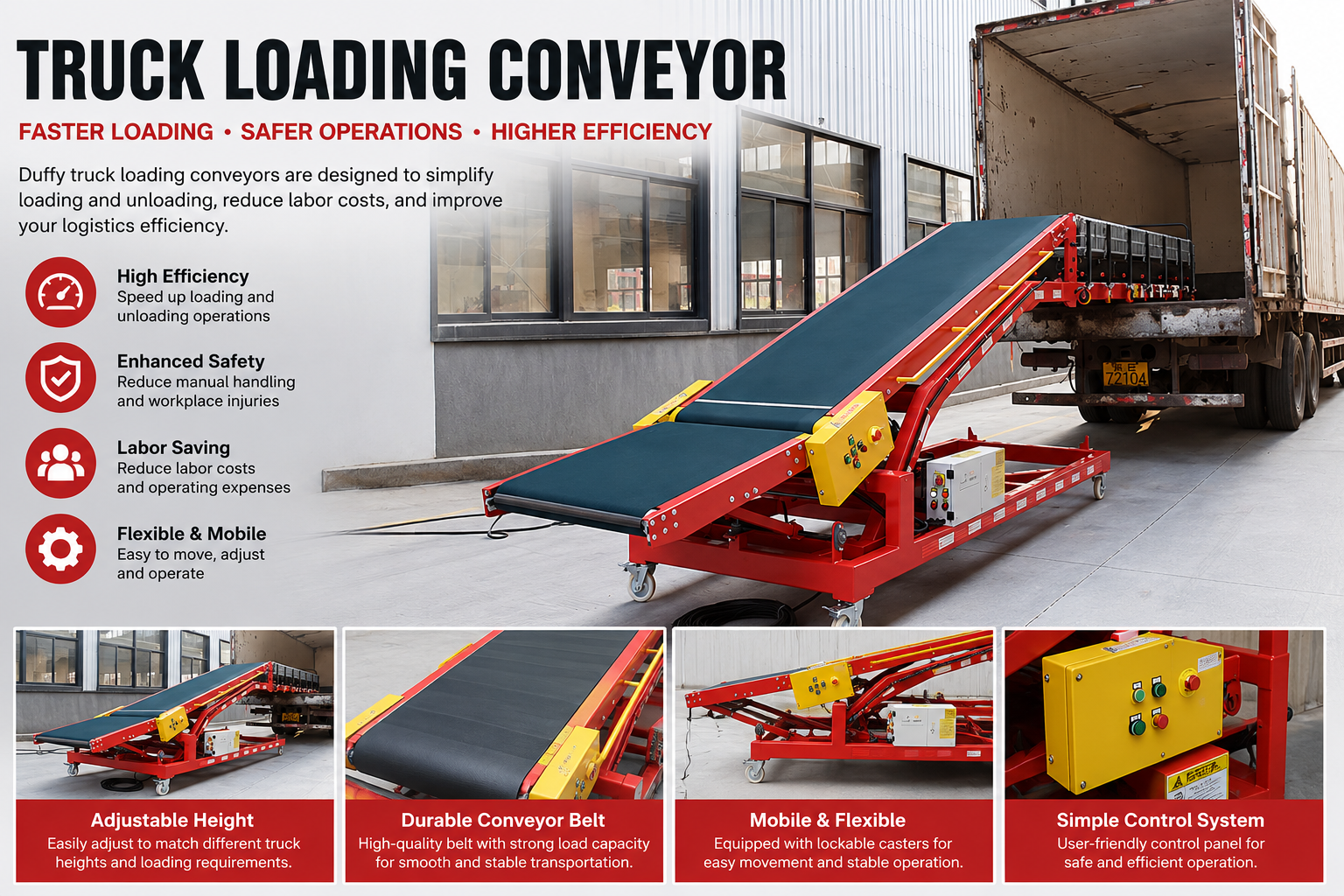
I have visited many warehouses where workers spent hours loading cartons by hand. The process was slow and exhausting. Some companies even needed extra temporary labor during peak seasons. A truck loading conveyor changes this situation completely. It creates a smooth flow between storage areas and transportation vehicles. As order volumes continue to increase, especially in e-commerce and parcel distribution centers, efficient loading equipment becomes a necessity rather than an option.
How Does a Truck Loading Conveyor Work?
Many warehouse managers know they need faster loading operations. Still, they often do not understand how a loading conveyor actually improves efficiency.
A truck loading conveyor uses powered belts or rollers to transport products directly into or out of a vehicle. Operators can adjust the conveyor position to match truck height and loading requirements.
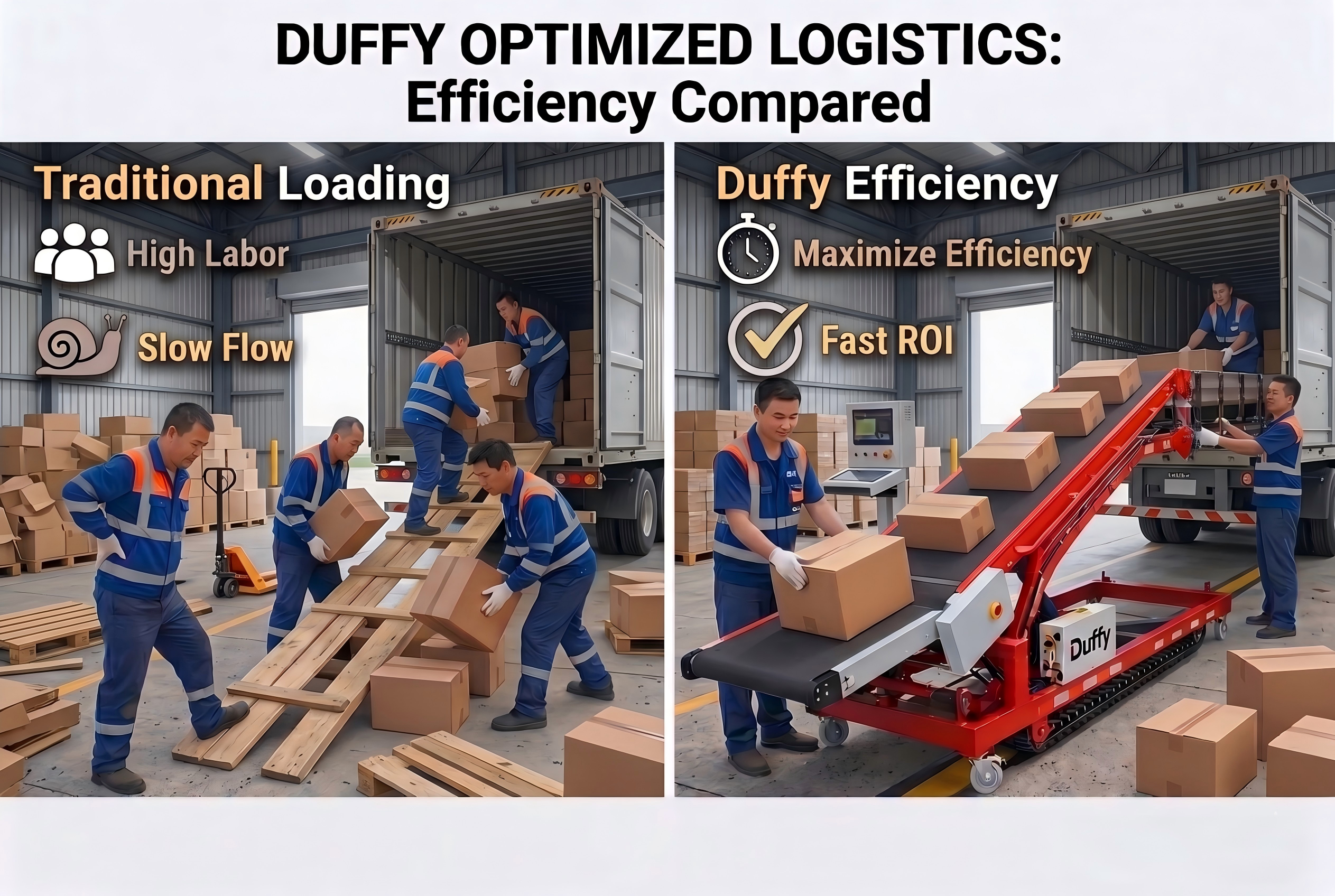
When I first introduced a truck loading conveyor to a logistics customer, their biggest concern was whether it would fit different truck sizes. The answer was simple. Modern loading conveyor systems are designed with adjustable heights and extendable lengths. Workers can move the conveyor closer to the loading point, reducing walking distance and handling time.
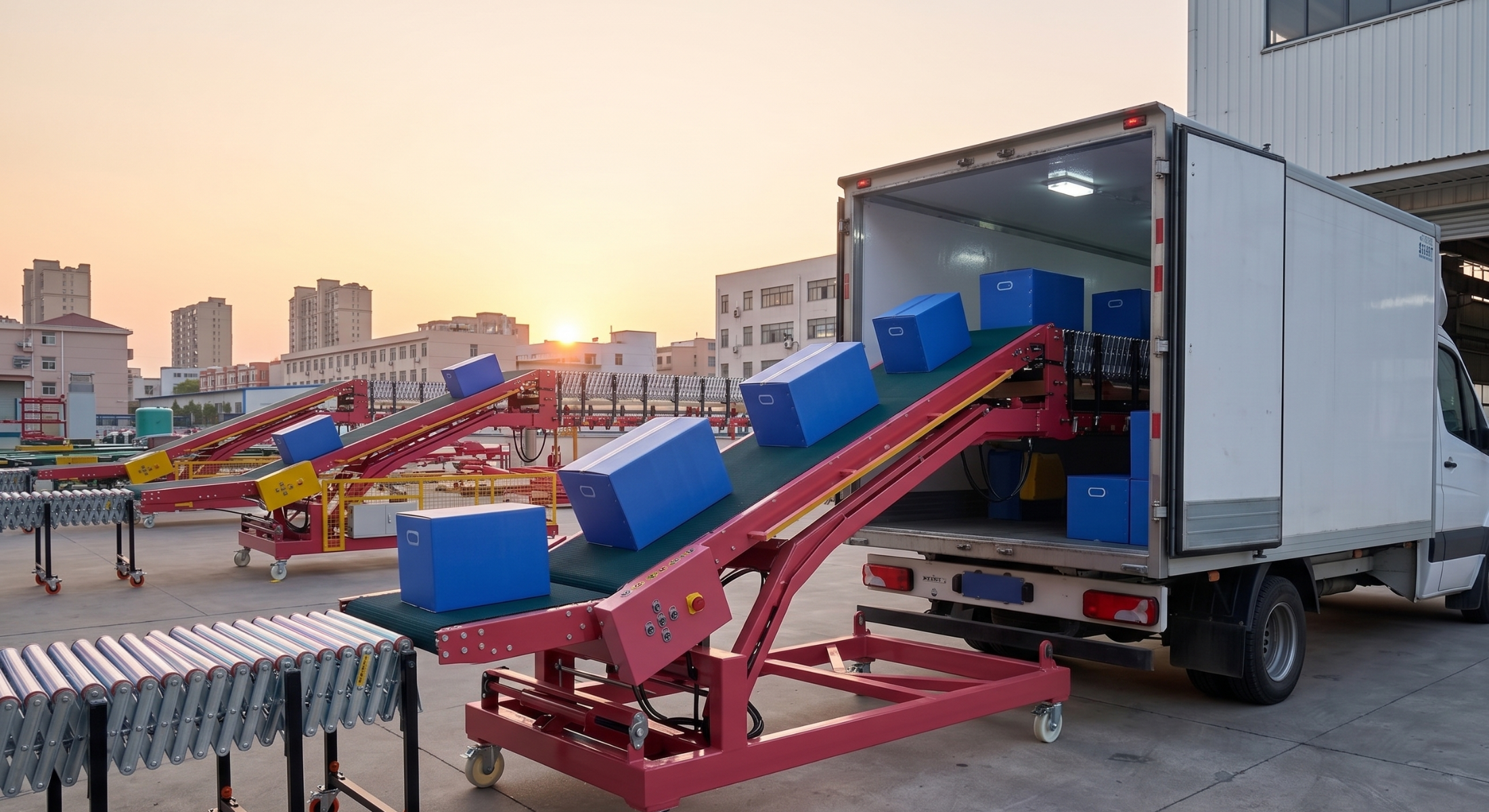
Many systems include powered belts, rollers, and telescopic sections. These features allow cartons, parcels, and packaged products to move smoothly without repeated lifting. Some loading conveyor belt systems can even connect directly to sorting lines. This creates a continuous material flow from storage to transportation. The result is faster truck turnaround time and lower labor requirements. Warehouses that process thousands of parcels each day often see immediate productivity improvements after installation.
What Are the Main Benefits of Loading Conveyor Systems?
Many companies hesitate before investing in new equipment. They worry about costs and return on investment.
Loading conveyor systems reduce labor expenses, improve loading speed, enhance workplace safety, and increase daily throughput. Most facilities recover their investment through labor savings and higher efficiency.
I often explain to customers that labor is usually the largest operating expense in warehouse loading operations. A loading conveyor helps reduce repetitive manual handling. Workers spend less time carrying products and more time managing operations.
Safety is another major advantage. Repeated lifting can lead to back injuries and fatigue. A conveyor system minimizes these risks by moving products mechanically. This creates a safer working environment and helps reduce compensation claims.
Space utilization also improves. Flexible conveyor systems can extend during operation and retract when not in use. This feature is especially useful in warehouses with limited floor space. During peak seasons, companies can process larger volumes without adding significant labor resources. The combination of labor reduction, safety improvement, and operational efficiency makes loading conveyor systems a valuable long-term investment.
Why Is a Lorry Loading Conveyor Popular in Distribution Centers?
Distribution centers face constant pressure to process more orders in less time. Traditional loading methods often cannot keep up with growing demand.
A lorry loading conveyor allows distribution centers to load and unload vehicles faster while maintaining consistent operational performance.

I frequently work with parcel hubs and e-commerce fulfillment centers. These facilities handle thousands of cartons every day. During peak periods, loading operations can become a bottleneck if equipment is not efficient enough.
A lorry loading conveyor helps eliminate this problem. Operators can position the conveyor directly inside the trailer. Goods travel continuously from the warehouse to the vehicle. Workers no longer need to carry products across long distances.
This system is particularly useful for courier companies, third-party logistics providers, and retail distribution centers. Fast truck turnaround means more deliveries can be completed each day. Companies can improve customer satisfaction while controlling operational costs. In highly competitive industries, these advantages often create a significant business edge.
How Do You Choose the Right Loading Conveyor Belt?
Many buyers compare conveyor options but struggle to identify the most suitable solution for their operation.
The best loading conveyor belt depends on product size, weight, throughput requirements, available space, and future expansion plans.
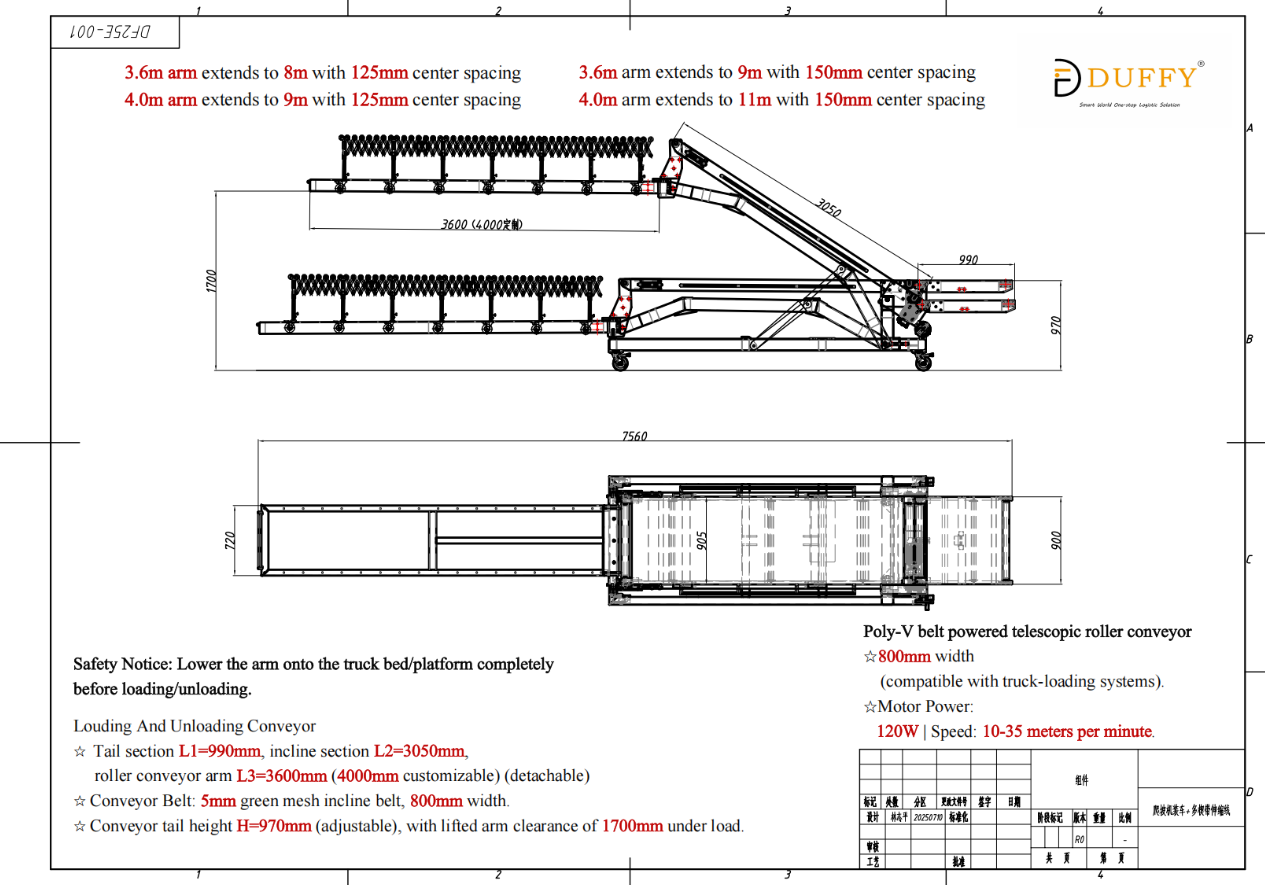
When customers contact me, I always start by understanding their application. Different industries have different requirements. A parcel sorting center may need a high-speed powered conveyor. A manufacturing facility may prioritize heavy-duty load capacity.
Conveyor length and width are important considerations. The equipment should reach deep inside trucks while accommodating the product dimensions being transported. Height adjustment is also critical because loading dock heights often vary.
Durability should never be overlooked. Quality components reduce maintenance costs and improve system reliability. At Duffy Machinery, we manufacture conveyors using robust steel structures and carefully selected components. Our engineering team customizes solutions based on customer requirements rather than offering a one-size-fits-all product.
Companies should also consider future growth. Selecting a scalable loading conveyor system helps avoid costly upgrades later. A properly designed conveyor solution can continue supporting operations as business volumes increase over time.
A truck loading conveyor improves loading speed, reduces labor costs, enhances safety, and supports warehouse growth. It is one of the most effective investments for modern logistics operations.
