

How to maintain high loading dock safety standards for conveyor operations?
Are you worried about accidents at your loading dock? Safety risks can hurt your workers and stop your production. We need to follow strict standards to keep everyone safe and moving.
Loading dock safety for conveyor operations requires a mix of proper equipment guards, clear worker training, and smart technology like boom conveyors. You must use emergency stops, anti-slip surfaces, and regular inspections. These steps prevent falls, caught-in injuries, and heavy lifting strain while ensuring efficient material handling.
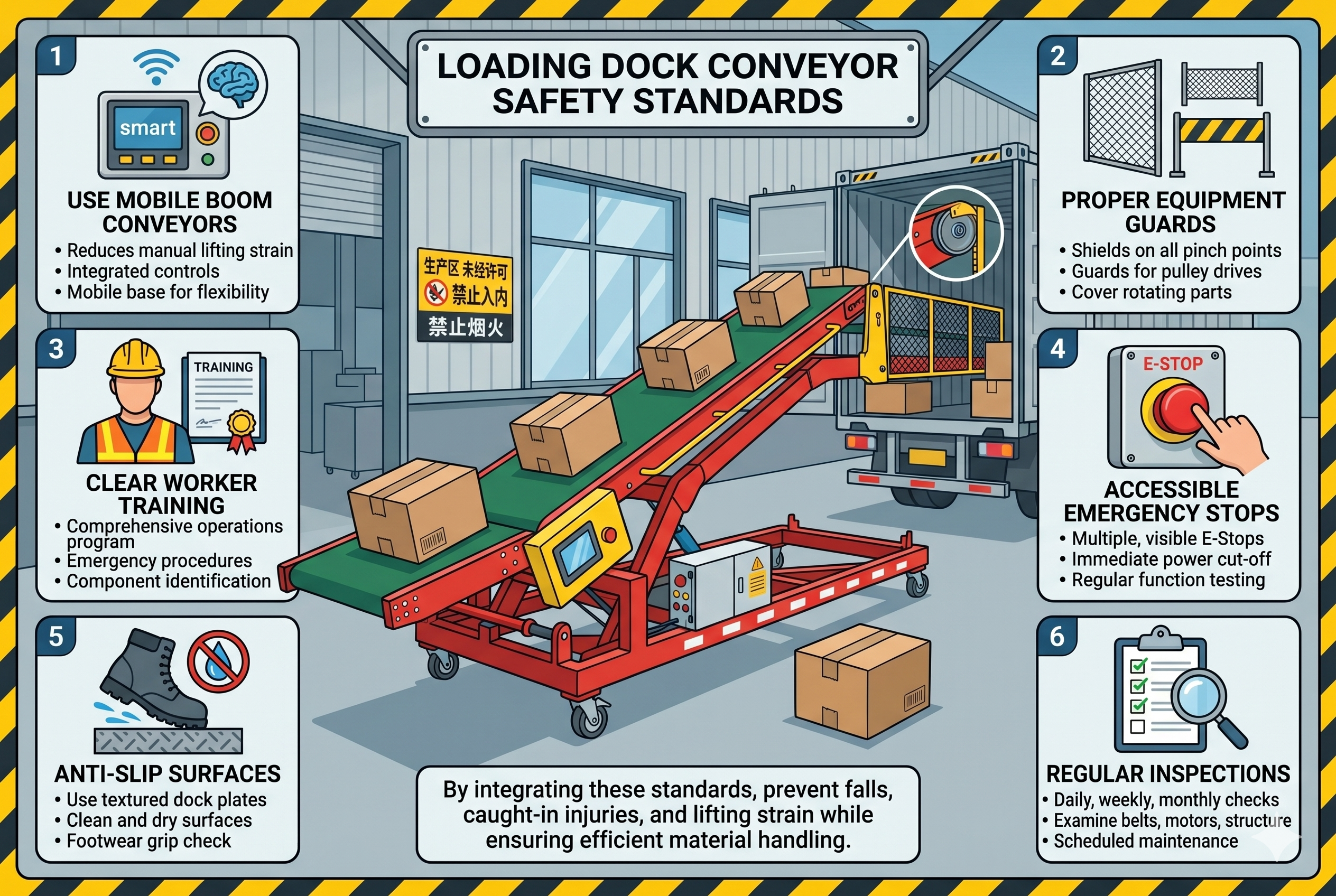
Walking through our factory, I often see how a busy dock can turn into a mess. One small mistake can lead to a big problem. I want to share how we handle these risks. If you ignore these rules, you risk more than just a broken machine; you risk your team. Let's look at the best ways to protect your warehouse.
Why is a Climbing Conveyor essential for ergonomic safety?
Do your workers struggle with heavy boxes on steep inclines? Lifting items manually from the floor to a high truck bed causes back pain and slow work. It is a major safety hazard.
A climbing conveyor solves ergonomic issues by bridging the height gap between the warehouse floor and the truck. It uses a powered belt to move goods up or down automatically. This removes the need for manual lifting on slopes, which significantly reduces the risk of musculoskeletal injuries for your dock staff.
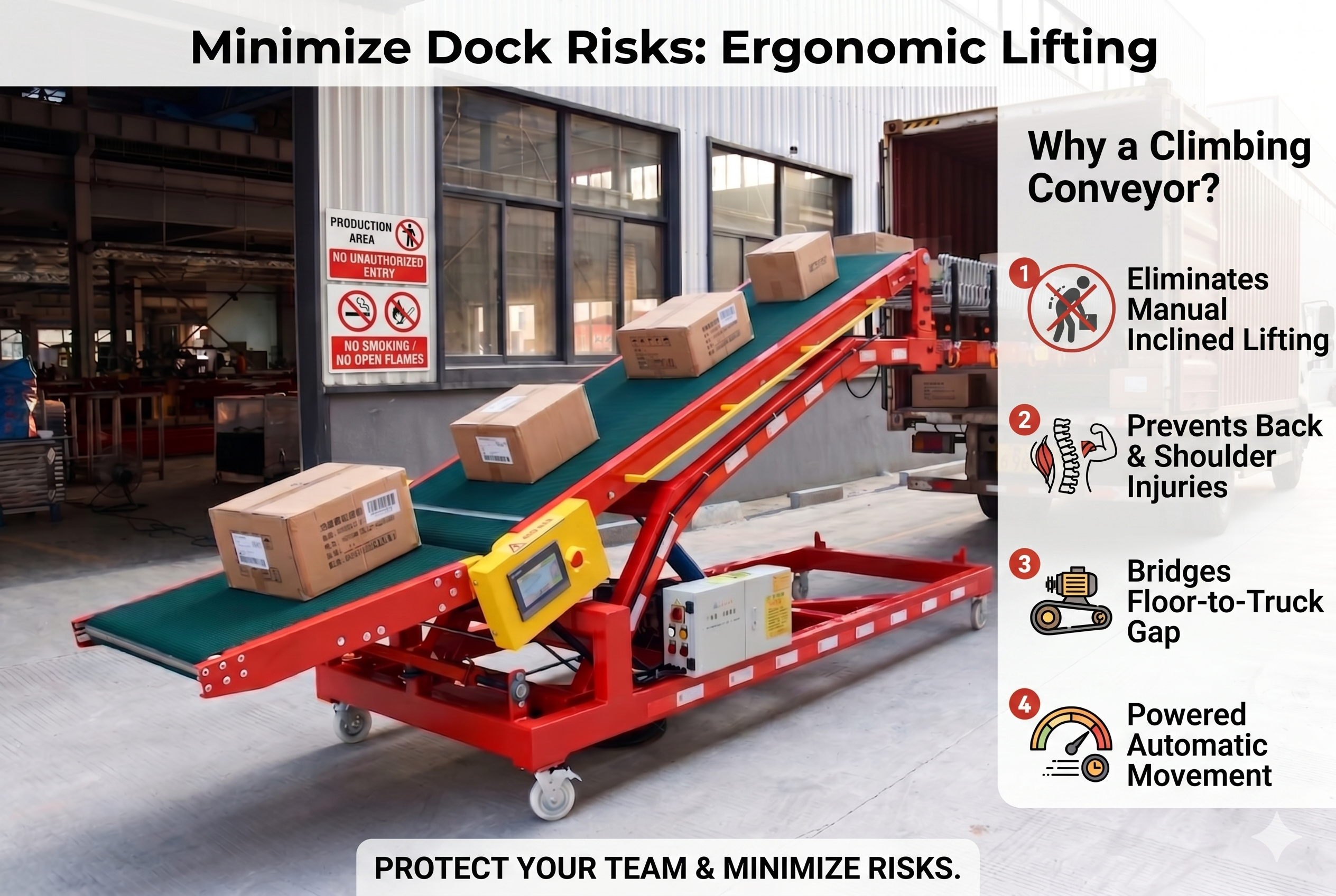
I remember seeing our team try to move heavy cartons up a ramp before we installed our specialized climbing conveyors. They were tired and moving slowly. Now, our system shows a clear height difference from the floor to the truck. This makes the work much easier. In our pharmaceutical projects in Anhui, we use these to keep delicate medicine boxes moving without human strain. You should look for systems with adjustable heights between 1 and 1.7 meters. This flexibility ensures the belt matches the truck level perfectly. We also add side guards to prevent items from falling off. High-quality climbing conveyors must have anti-slip belts to handle the incline. If the belt is too smooth, boxes will slide back and cause accidents. We focus on R&D to make sure our belt grip is strong for every load.
How do boom conveyors improve dock efficiency and security?
Is your loading process too slow because workers have to walk inside deep trailers? Sending people deep into dark containers is dangerous and inefficient. They can get trapped or hit by moving goods.
Boom conveyors, or telescopic conveyors, improve safety by extending directly into the trailer. This allows workers to stay at the edge of the load. It reduces walking time and keeps staff out of the dark, cramped spaces inside the truck. This setup prevents collisions and heat exhaustion during summer loading.
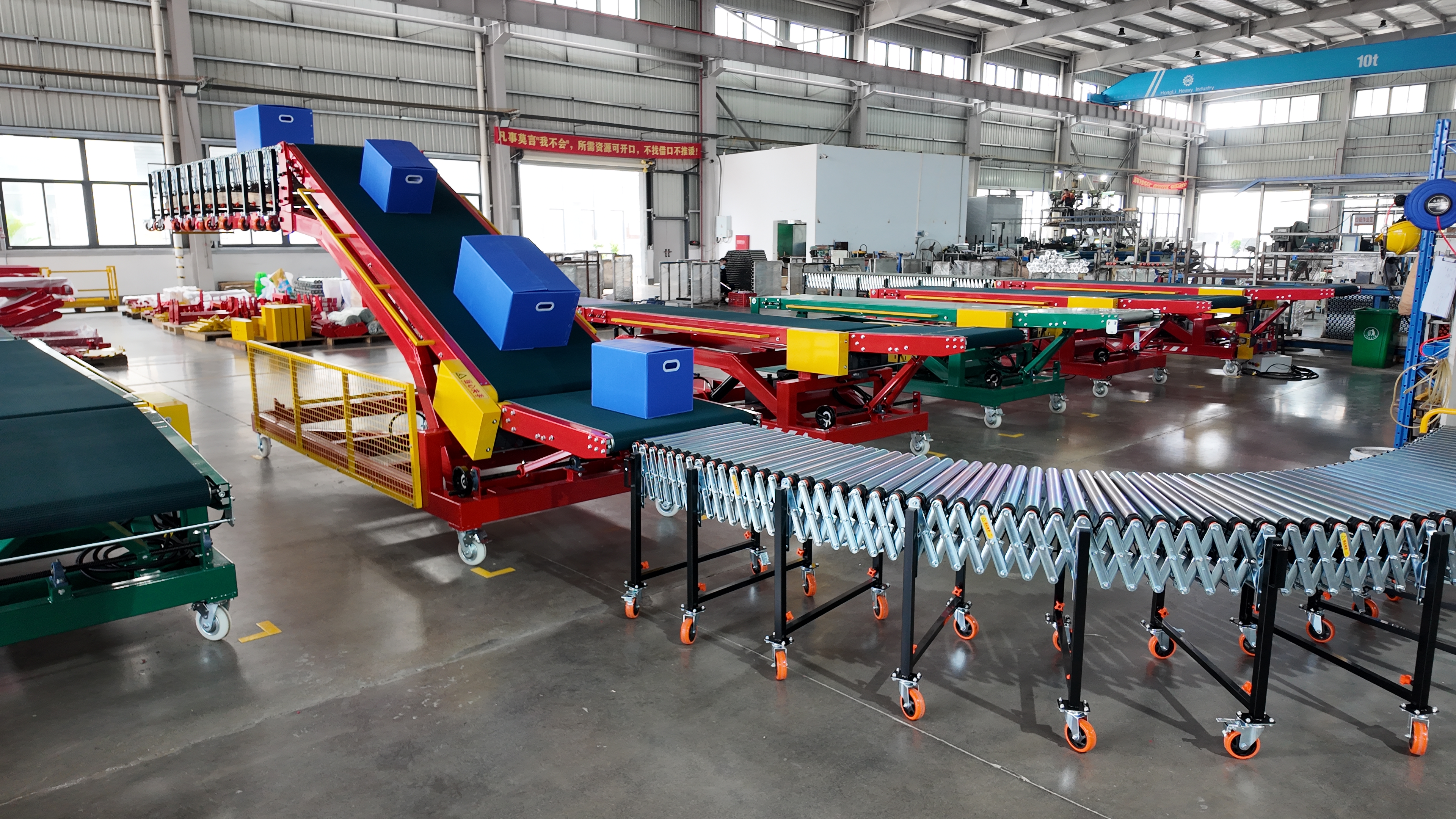
When I visit logistics centers for SF Express or JD.com, I see boom conveyors in action every day. These machines stretch and retract based on the space inside the truck. It is like a giant arm reaching out to help. I always tell my team that "altruism" means making the worker's life better. By using a telescopic boom, the worker does not have to carry a box for 10 meters inside a hot container. This is a huge win for safety. We design our telescopic lines to be very stable even when fully extended. You need to check the load capacity carefully. Standard belts handle about 50kg, but we can customize them for heavier parts. Safety sensors are also vital. If the boom hits an object, it should stop immediately. We test these sensors many times in our Workshop 2 before shipping. Clear lighting at the end of the boom also helps workers see what they are doing inside the trailer.
What are the key inspection steps for an unloading conveyor?
Do you know if your unloading equipment is ready for the next shift? Using damaged belts or loose rollers can lead to sudden mechanical failure. This puts your operators at high risk of injury.
Daily inspection for an unloading conveyor must include checking the belt tension, looking for worn rollers, and testing emergency stop buttons. You should also verify that all motor guards are in place. These simple checks catch small issues before they become dangerous accidents that stop your entire warehouse flow.
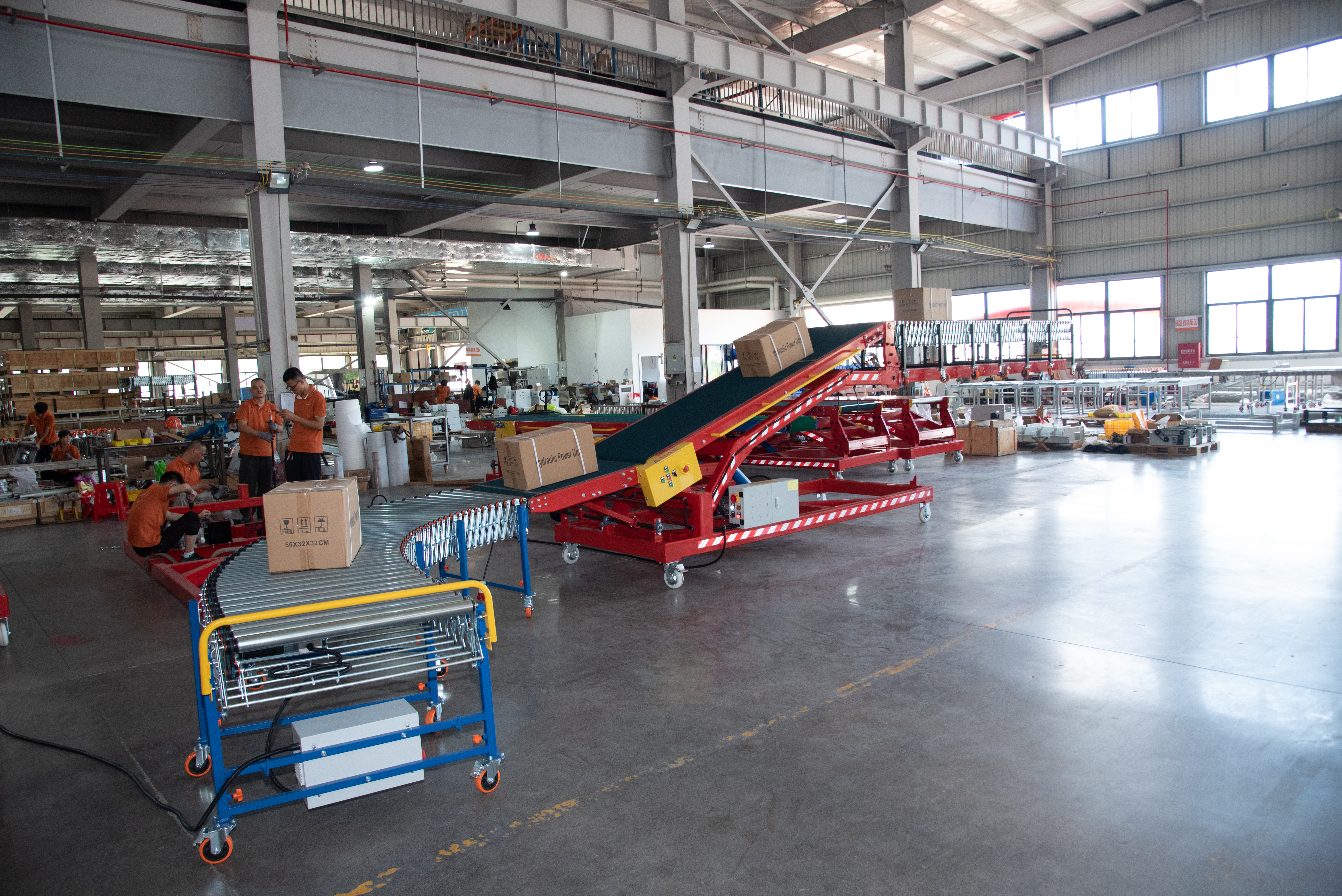
In our factory, we have a very strict inspection area. We follow four main steps: incoming, in-process, finished product, and outgoing checks. I apply this same logic to dock safety. Every morning, your lead operator should walk the line. Look at the "O-belts" or "multi-ribbed belts" on your roller lines. If they look frayed, replace them. I learned this the hard way when a belt snapped during a big project. It caused a long delay and a minor scrape for a worker. Now, we use our "Innovation QR Code" so workers can report worn parts instantly. We also check the electrical control boxes. Our team installs these in-house to ensure the PLC logic is safe. You must make sure the emergency stop is easy to reach. It should be red and unobstructed. If a worker gets a sleeve caught, that button is their best friend. Regular cleaning is also part of safety. Dust and debris can make the floor around the unloading conveyor slippery. Keep it clean to prevent falls.
Standard safety at the loading dock keeps your team healthy and your business profitable. Use climbing and boom conveyors to reduce physical strain and keep operations smooth and secure.
