

Are slow loading times hurting your profit? Forklifts often cause bottlenecks and high labor costs. Discover which system actually speeds up your truck loading process today.
Loading conveyor systems are usually the best choice for fast, continuous box loading in high-volume warehouses. Forklifts work better for heavy, palletized goods. A conveyor system reduces manual labor, speeds up truck turnaround times, and offers a higher return on investment for loose cargo.
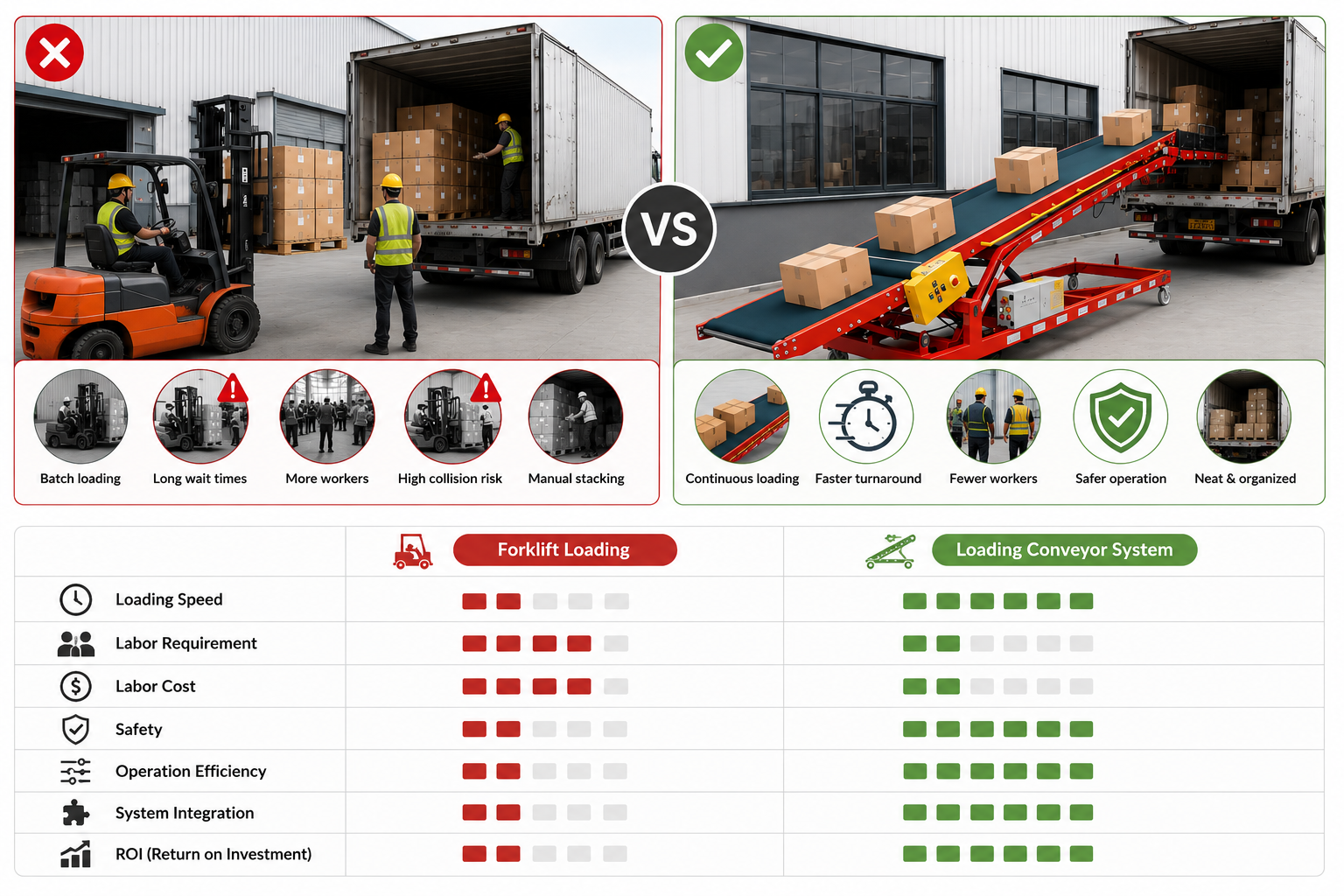
I have spent ten years in B2B overseas sales for industrial equipment. I see many supply chain managers struggle with loading delays every single day. Choosing the wrong equipment drains your budget. It also slows down your entire warehouse. You must fix this problem quickly. Let us look closely at how forklifts and conveyors compare. You will learn how to make the most profitable decision for your logistics center.
What Are the Real Labor Costs for Each System?
High labor costs eat your margins. Hiring and training forklift drivers is expensive. See how the right equipment cuts your daily labor expenses and boosts efficiency.
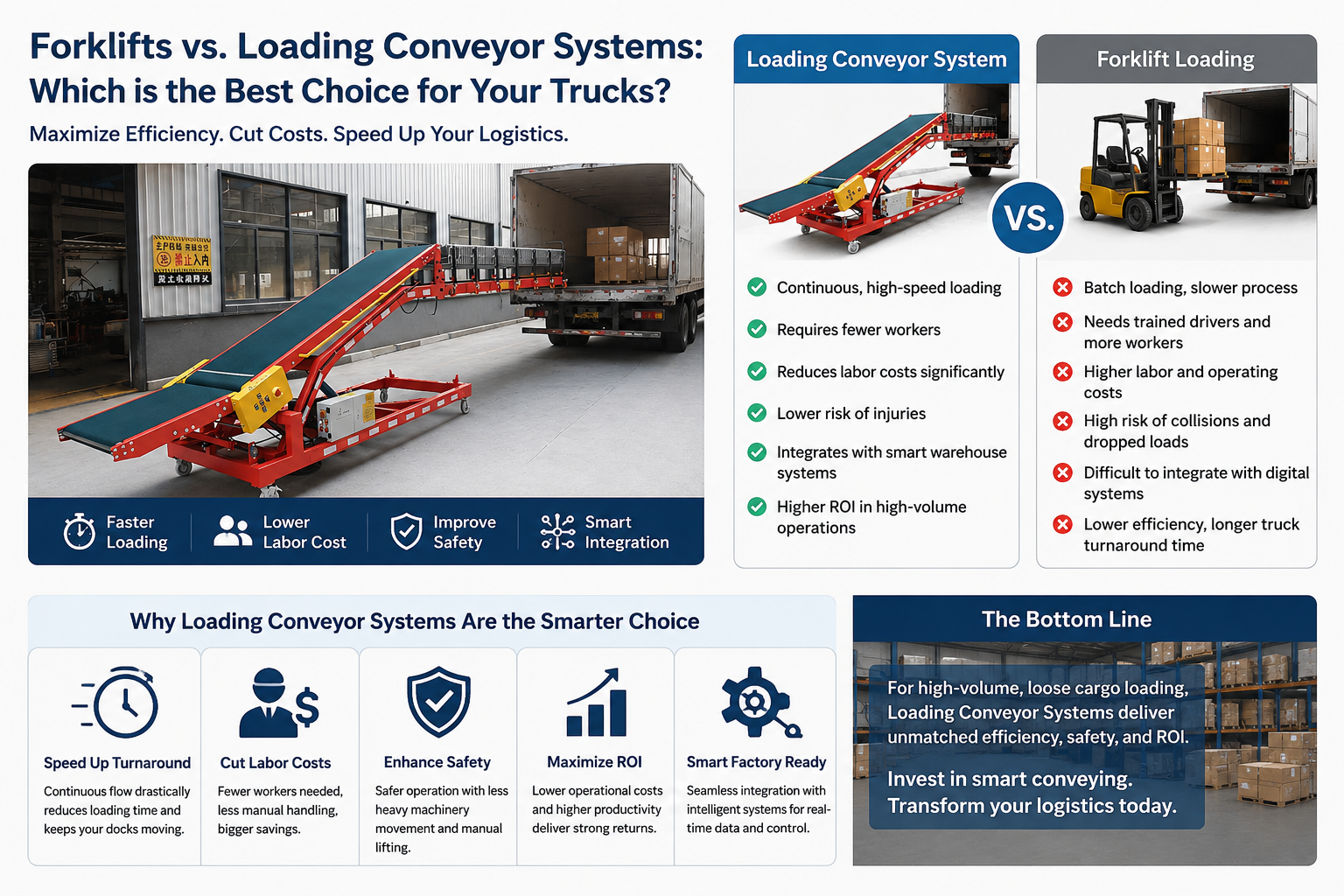
Forklifts require trained, certified drivers and more manual spotters. This increases your daily labor costs. Loading conveyors need fewer workers. They move goods continuously from the warehouse straight into the truck bed. This saves massive labor hours.
Analyzing the Daily Expense
I talk to large 3PL providers in North America every week. They all face the same problem. Finding good forklift drivers is very hard. It also costs a lot of money. When you use forklifts to load boxes, you also need workers inside the truck. These workers must stack everything by hand. This wastes time and labor. At Zhangzhou Duffy Machinery Co., Ltd., we focus on intelligent conveying solutions. We design our front-end loading conveyor systems to cut these exact costs. A loading conveyor moves the cargo smoothly into the truck. The workers just stand at the end of the line. They guide the boxes easily. You do not need expensive drivers. You do not need people running back and forth across the floor. This simple change improves your return on investment very quickly. We see many e-commerce fulfillment centers save thousands of dollars a month. They do this just by switching to a continuous flow system.
How Does Speed Affect Your Truck Turnaround Time?
Slow truck departures cause massive dock congestion. Waiting trucks mean delayed deliveries and unhappy customers. Find out which method moves your cargo faster and clears your docks.
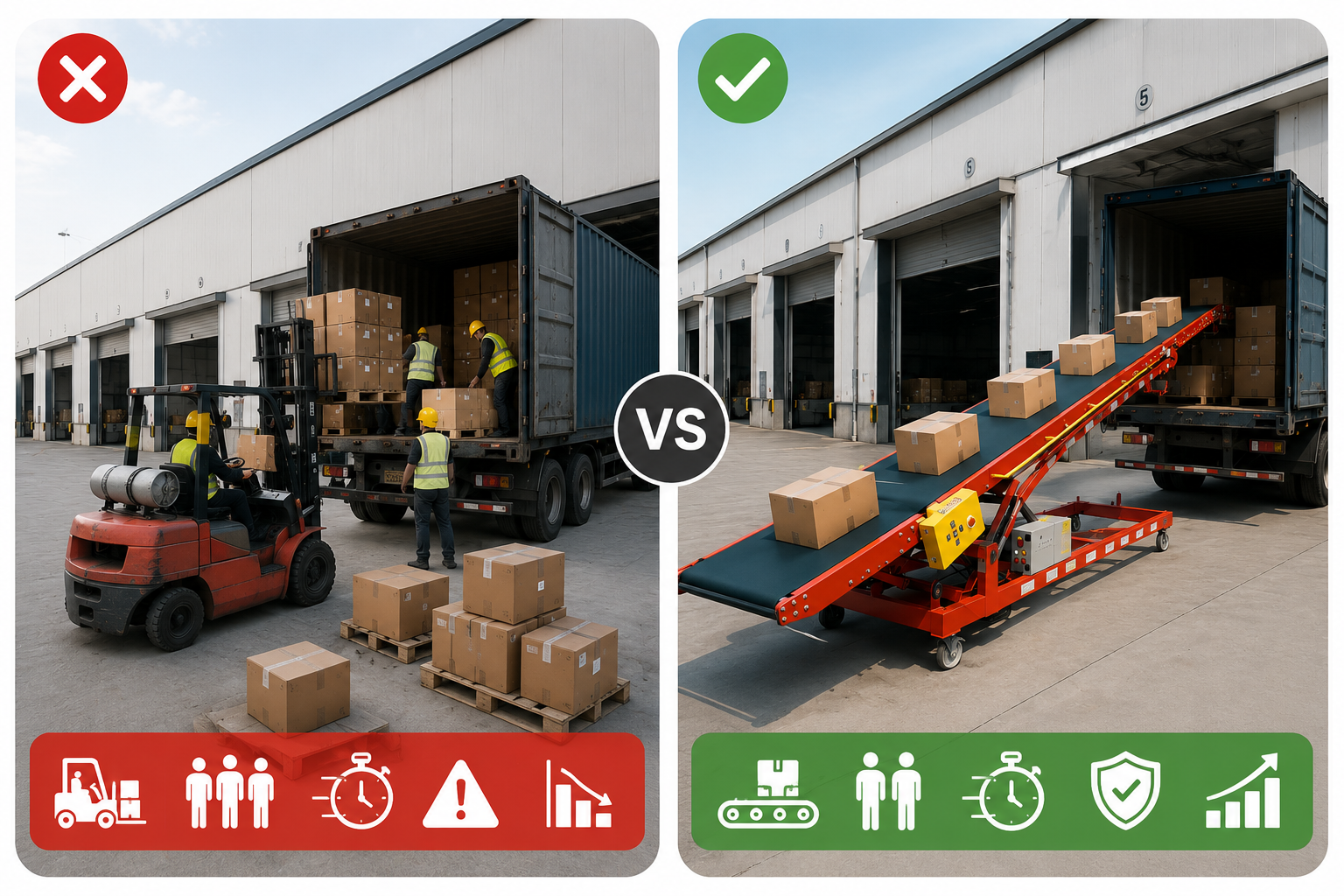
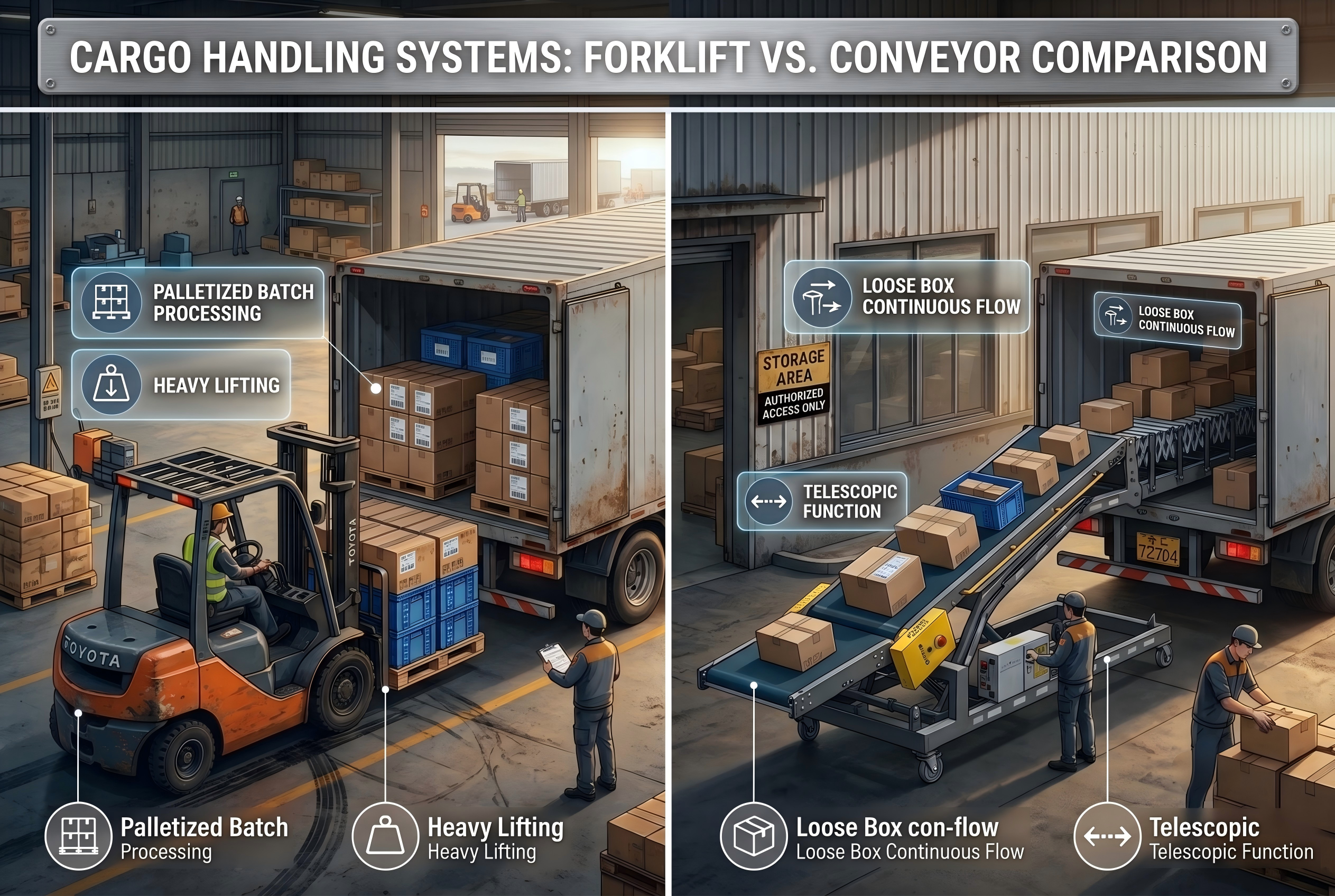
Loading conveyors offer a continuous, non-stop flow of goods. This drastically reduces the time it takes to fill a truck. Forklifts move in batches. This causes wait times while the machine travels back and forth between the warehouse and the dock.
Eliminating Dock Bottlenecks
Time is your most valuable asset in an active logistics center. A forklift picks up a load. It drives to the truck. It drops the load. Then it drives back. This back-and-forth travel takes a lot of time. If the driver stops, the whole loading process stops. A front-end loading conveyor system never stops. It feeds boxes into the truck without a single pause. Last month, I visited a large retail distribution hub. They used forklifts for loose boxes. Their trucks waited in the yard for hours. We installed a customized telescopic conveyor for them. We matched the new system to the exact height of their truck beds. The continuous flow cut their loading time by half. The truck drives in. It fills up quickly. Then it leaves. Fast turnaround times mean you can ship more goods every single day. You do not even need to add more dock doors. We optimize your conveying lines for maximum daily output.
Which Option Provides Better Workplace Safety?
Warehouse accidents cause injuries and stop production. Forklift crashes are a major risk in busy loading areas. Learn how to protect your team and keep your facility safe.
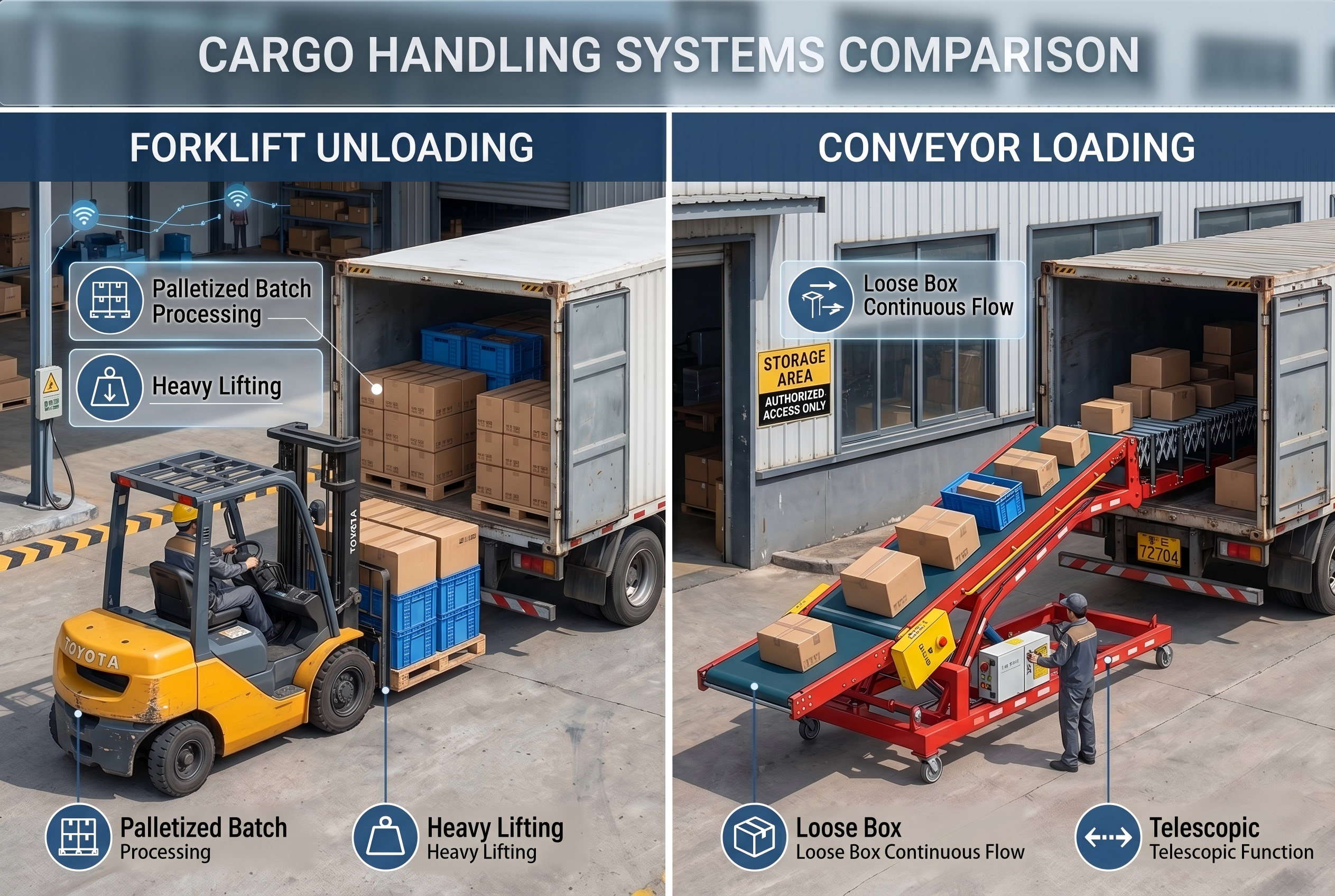
Loading conveyors are much safer. They reduce heavy machinery movement in tight spaces. They also limit manual lifting. Forklifts create a high risk of collisions, dropped loads, and severe worker injuries in busy logistics environments.
Protecting Your Team and Goods
Safety must be your top priority. Forklifts are heavy, moving machines. A warehouse is noisy and fast-paced. A forklift driver can easily miss seeing a worker on foot. Collisions happen too often. Also, forklift drivers sometimes drop loads. This damages your products. Our core culture at Duffy is "Respect Heaven, Love People." We believe in protecting workers from harm. A loading conveyor system is fixed in place. It guides the boxes safely from the warehouse to the truck. We engineer our systems with strong side guards. We use reliable sensors to prevent accidents. Workers do not have to carry heavy boxes across the floor. They stay in their safe zones. This setup greatly lowers the risk of physical injuries. A safe warehouse is a productive warehouse. You save money on insurance claims. You keep your staff healthy and happy. You build a better work environment for everyone.
How Do They Fit Into Your Smart Factory Upgrades?
Outdated loading methods hold back your digital transformation. Standalone manual machines cannot connect to your modern data systems. Discover the equipment that truly integrates with your smart warehouse.
Modern loading conveyor systems easily integrate with intelligent warehouse software. They provide real-time data tracking and automated sorting capabilities. Traditional manual forklifts cannot offer this seamless digital connection. This limits your ability to optimize your entire supply chain.
Connecting the Data Flow
Many traditional factories want to upgrade to smart manufacturing. They buy advanced software. But they keep using old loading methods. This breaks the data chain. As a Head of Global Supply Chain, I always look at the big picture. You need systems that talk to each other. Our intelligent mid-range sorting and conveying systems connect directly to your central control data. A box travels down the loading conveyor. The system scans it. It weighs it. It records the data instantly. You know exactly what goes into the truck. You cannot do this easily with a standard manual forklift. The conveyor becomes a smart link in your digital supply chain. We recently helped a food processing plant. We connected their new loading line to their management software. They now track every single box in real-time. This level of control stops shipping errors. It builds huge trust with your end customers.
Both options have uses. But loading conveyor systems provide unmatched speed, safety, and ROI for high-volume cargo. Invest in smart conveying to lower labor costs and optimize your logistics today.
